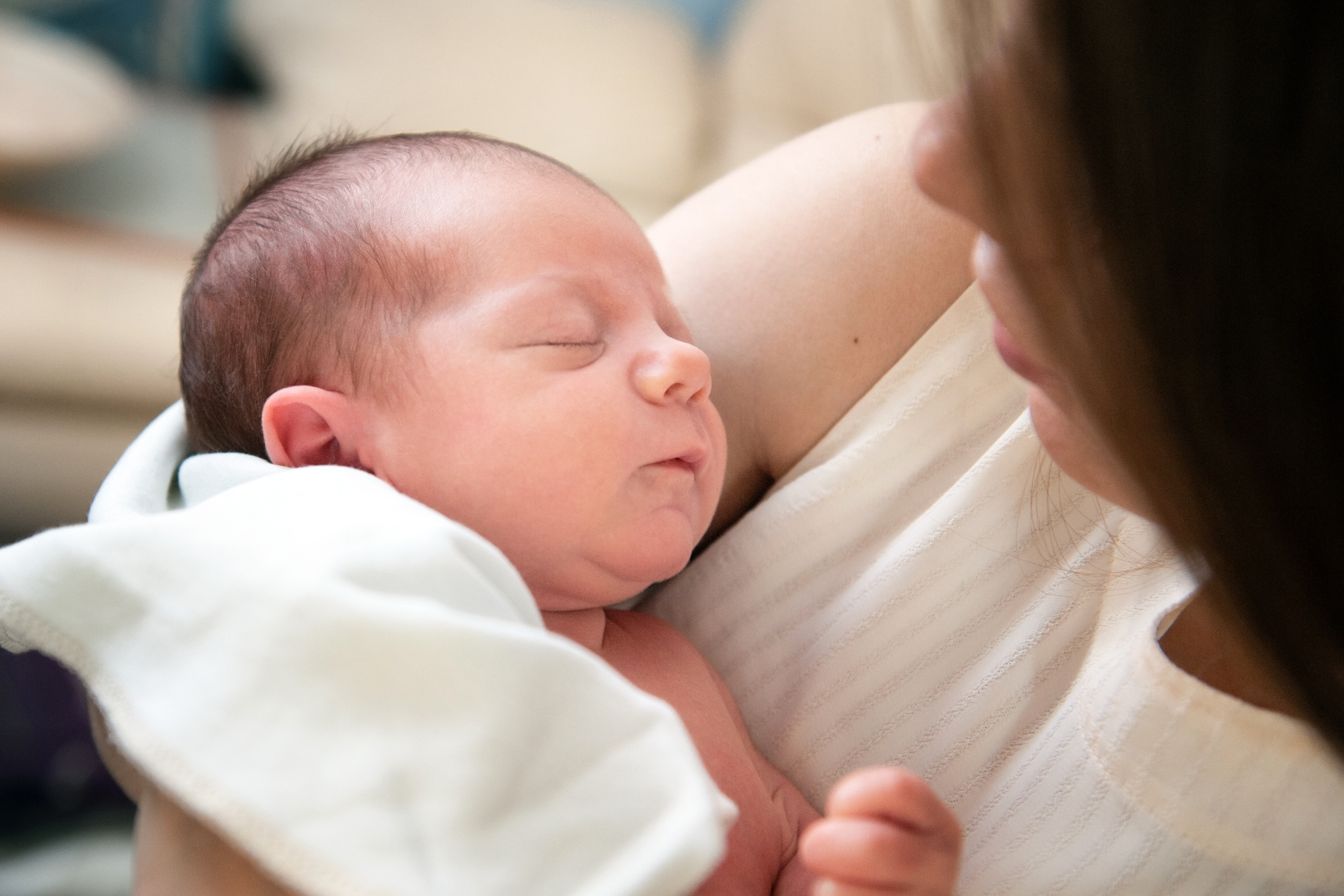
Welcoming a child is one of the most significant events in the life of a woman and a man.
It is entirely normal to have questions and concerns about pregnancy, childbirth, and becoming a parent. This transition often brings uncertainties and requires a period of adjustment.

Childbirth is an intense moment, influenced by the mother’s physical and emotional state, her environment, and the support she receives. Taking care of oneself, staying informed, and being well supported are key elements to experiencing this moment positively.
Each birth is unique and carries its share of unpredictability. It is important to remain open to different possibilities, as plans may change. What truly matters is that the mother and child are safe and well.
Although a cesarean delivery may not be planned initially, some circumstances make it the best option. In such cases, it is natural to feel grateful for this intervention, which can ensure everyone’s well-being. In the end, that’s what truly counts: a healthy baby and a healthy mother.
Giving birth is a deeply transformative experience that often allows new parents to learn more about themselves. Women have a hidden strength within them; trusting in that inner power is essential to go through this unique experience.
Supportive care is also essential during labor. Being surrounded by a positive, respectful, and calming environment helps promote relaxation and confidence. The presence of a partner or a significant person plays a vital role. It is also possible to seek support from a birth companion, often referred to as a doula.

It can be difficult for the birth partner to know how to help. Many express feelings of helplessness or uselessness. However, the most valuable support often lies not in what is done, but in simply being present. Being fully there, attentive and emotionally available, is often what the birthing person needs most.
Contractions are undeniably painful, but they serve a very clear purpose: they signal progress toward the baby’s arrival. You can learn to manage the pain more effectively by focusing on its meaning. Without these sensations, it would be difficult to recognize the key stages of labor.
There are several natural ways to relieve pain during childbirth. Staying active and trying different techniques can help you discover what feels right for you: using a birthing ball, changing positions, taking a warm bath, receiving lower back massages… Each person responds differently, so it’s important to explore what brings comfort.
A vaginal birth typically involves three physiological stages:
-
Effacement of the cervix (it becomes thinner)
-
Dilation of the cervix (it opens to allow the baby to pass through)
-
The baby’s descent into the mother’s pelvis
These stages can be compared to putting on a turtleneck: it first needs to stretch and open to let your head pass through.
Nature is well designed. Trusting your body and the process is a fundamental part of preparing for parenthood.
To learn more, you can read these articles (in french):
- Do you know affective preparation for birth?
- Relaxation and Labour
- An Episiotomy
- Caesarian or no?
- Breech Birth—Yes or No?
Or watch these videos (in french):
- Warning Signs of Imminent Labour
- Evolution of Labour
- Reactions of Mothers During Labour
- The Experience of Fathers During Labour
Marie Fortier
The Baby Expert